Thursday, June 15, 2017

Matt Reviews: Batman: Return of the Caped Crusaders (And the Legacy of Adam West)


The nerd community has lost a great man. No, not just a great man. A Batman. For Adam West, 88 was still too soon to leave.

I got this movie earlier this year, but I didn’t have the time to watch or review it. I figure now is a more appropriate time than ever.

Adam West and Burt Ward reprise their iconic roles as Batman and Robin again for this animated movie celebrating the 50th anniversary of the 1966 Batman TV show. Gotham City’s criminal masterminds have joined forced yet again: the Joker, the Penguin, the Riddler, and Catwoman (with Julie Newmar reprising her role). The Caped Crusaders once again leap into action to thwart their nemeses, but they have an extra trick up their sleeves: a special formula that is slowly turning Batman evil. With a more brutal Batman on the rise and intent on taking Gotham for his own purposes, Robin forges an uneasy alliance with Catwoman to bring his friend back to the stalwart crusader we know and love.

This movie is one big love letter to the camp ridiculousness of the TV series, and I love every minute of it. You can really tell that the people who worked on this movie loved the ‘60’s series so much and wanted to make a product that celebrated everything that made it memorably goofy. From the array of progressively sillier Bat-gadgets, to the impossibly accurate deductions to the Riddler’s puzzles, to the arduous assault of amaranthine alliterations, all of the classic tropes are there. It’s got so much awkward timing, corny humor, and bombastic jazz music that it feels like I’m watching a cheap 1960’s TV show or cartoon. Not that that’s a bad thing. And while the TV series was a tongue-in-cheek satire of the silliness of the comics, this movie presents itself as a good-natured exaggeration of the TV series itself. And it absolutely revels in the lengths it can extend these ‘60’s-era gags to.

Being a movie rather than an episode of the TV series, this film makes sure that the plot feels big for the Adam West Bat-verse. All of the series’ classic villains are there, Batman and Robin go to freaking space (in their patented Bat-rocket, no less), and the biggest threat is a Batman who acts more like his violent modern incarnation than his squeaky-clean ‘60’s version, and who plans to make duplicates of himself to take over Gotham City. That last bit alone is a brilliant addition, with Batman’s descent into edginess and evil presenting itself as a commentary on the current comics industry. The highlight is Adam West reciting lines from darker incarnations of Batman like “You wanna get nuts? Let’s get nuts!” while brutally beating the snot out of his villains with Bat-brass knuckles.

"And that's for mailing used condoms to the cast of Suicide Squad, you fiend!"
"Wrong Joker, Batman."

Speaking of Evil Batman, this movie features, in my opinion, Adam West’s best performance as the Caped Crusader. The first part shows that even as age overcame him, he could still give a solid performance as the stalwart do-gooder dressed in tight fabric. But he also convincingly plays a much more intimidating Batman for the majority of the flick. For an actor of his age who is mostly known for a low-budget superhero show (and a recurring role on an adult cartoon also of questionable quality), he provides a solid range in his performance, and you can really tell he’s giving it his all and having fun with it.

The rest of the cast isn’t bad, either. Surprisingly, Burt Ward – over seventy years old at the time of the film’s release – still sounds uncannily young as he voices the Boy Wonder. Sometimes he sounds a bit old to be voicing a supposed teenager, but it’s not as distracting as it should be. The same can’t really be said of Julie Newmar, unfortunately. Out of the three reprisals from the TV series, Newmar is the one that I feel hasn’t aged as well. Whereas West’s age didn’t prevent him from giving a good range for Batman’s performance, Newmar was more one-note and obviously sounds a lot older than what her youthful character model suggests. But considering the woman is 83 years old, this can’t really be helped. Not everyone can send their vocal chords back to 1966 like Burt Ward apparently can.

The rest of the cast are voice actors replacing the rest of the deceased original cast, and they’re all pretty decent. Jeff Bergman (Bugs Bunny and Daffy Duck from The Looney Tunes Show) and William Salyers (Rigby from Regular Show) both deliver pretty good impersonations of Cesar Romero’s Joker and Burgess Meredith’s Penguin, respectively. Wally Wingert reprises his role as the Riddler from the Arkham games, only this time adding in more Frank Gorshin influence than what was presented there. The others – Gordon, Alfred, O’Hara, and Aunt Harriet – are just okay; nothing too memorable, but then again, these characters didn’t have over-the-top quirks like the heroes or villains (save for O’Hara’s excessive Irish-ness).

"Holy I-Don't-Want-To-Miss-A-Thing, Batman!"

The only major complaint I have regards the ending, and how the film seems to drag on for just a bit too long. Evil Batman and his duplicates are defeated using a fitting, overly prepared deus ex machina, but then it’s revealed that everything that has happened in the film thus far had been the machinations of the Joker, Penguin, and Riddler. So that means that stealing the duplicator ray, turning Batman evil, hijacking a rocket to supposedly duplicate the Earth, having Catwoman turn on them, getting thrown in jail, and having Evil Batman enact a plan to have his own duplicates take over Gotham City was all an elaborate distraction to make sure that the three could steal some valuable crap from museums. And then Batman, Robin, and Catwoman need to go and stop them, adding about ten more minutes on to the film.

Even for the campy standards of the show and movie, this is a bit too much of a stretch to be believable and needlessly complicates the plot. They could have just had Batman be the ultimate bad guy – with him taking out his three arch-villains showing just how big a threat he is – eliminating this complicated plot thread and keeping the film from overstaying its welcome. Also, it throws in a random bit where Catwoman supposedly kills herself to prevent going back to jail. Um…sad?

But I thoroughly enjoyed Return of the Caped Crusaders for the sheer love and appreciation it shows towards the classic Batman show. It’s retro, it’s funny, it’s campy, it’s got everything you’d expect from an Adam West Batman movie. In tone, it’s similar to The Lego Batman Movie: a lighter and goofier take on the franchise that pokes fun at the history of Batman while also celebrating it. Comparing it to the live action movie based on the ‘60’s show, this one definitely feels larger in scope and more important to the overall universe. Honestly, this movie could have potentially served as a finale to the TV series.

So if you love the campy, onomatopoeia-throwing antics of the Batman TV series, then you’ll definitely want to check out this animated tribute. There’s supposedly a sequel in the works based on the lost episode featuring Two-Face, and if what I’ve read is true, Adam West finished recording his lines for it late last year. So if they still plan on finishing and releasing it, there could be a chance that Return of the Caped Crusaders is not the last time we’ll hear Adam West as Batman.

"I love you."
"I know."

Final verdict: 8/10.

And so, we say goodbye to another beloved celebrity. At this point, the onslaught of celebrity deaths have left me a little numb every time a new obituary pops up on my news feed. But this one…this one stung more than others. I never really thought of Adam West’s death as a possibility. He was always there, and I foolishly thought he always would be.

No one can deny the influence of the ‘60’s Batman TV show. It didn’t just leave an impact on the Batman mythos, it left an impact on the world. It gave us striking visuals like the Bat-poles and the sound effect bursts. It reminded us that some days, you just can’t get rid of a bomb. It brought villains like the Riddler and Mr. Freeze to the forefront of Batman’s rogues gallery, laying the groundwork for the memorable characters they would become. It gave us the character of Batgirl, who would go on to become one of the strongest female role models in comics. And if you ask anyone to sing the Batman theme song, there probably isn’t a person alive who couldn’t indulge you.

And at the front of it all was Adam, this strange, funny man who played a superhero dressed in bat-themed tights with a straight face and a sense of humor drier than the Sahara. He showed the world the deadpan comedic potentials of the Caped Crusader that would shape the lighter aspects of Gotham City for decades to come. To many, he was their first Batman. To others still, he is their Batman. Despite the silly nature of the show, he’s just as much a Batman as Bale or Affleck, Keaton or Conroy. And in his cameos in various Batman media – from The Animated Series’ Gray Ghost to The Brave and the Bold’s Thomas Wayne – you can always feel just how much he is appreciated by fans and creators alike.


But he wasn’t just a Batman. He was a husband and father, a grandfather and a friend. He was a lover of pot roast. He went to Mars and the Old West. He met Johnny Bravo and the Three Stooges. He was a crazy celebrity on The Fairly OddParents, and one of the only consistently funny things on Family Guy.

I never got to meet him to personally extend my thanks to him for all he’s done for Batman and geeks everywhere, and now I never will. But if I ever run into Burt Ward or Julie Newmar, I’ll be sure to let them know just how appreciated they are.

And if Heaven has a bright red Bat-phone, I hope Adam is listening in to all the things the people on Earth are saying about him right now.

Then, I hope he puts down the receiver to go and dance the Batusi with Cesar and Burgess, Eartha and Frank, Neil and Alan and Yvonne.

Thank you, Mr. West.


1928 – 2017


‘Til next we meet, old chum.

Monday, June 12, 2017

Who Review: "Empress of Mars" (Series 10, Episode 9)

WARNING: SPOILERS, sweetie.


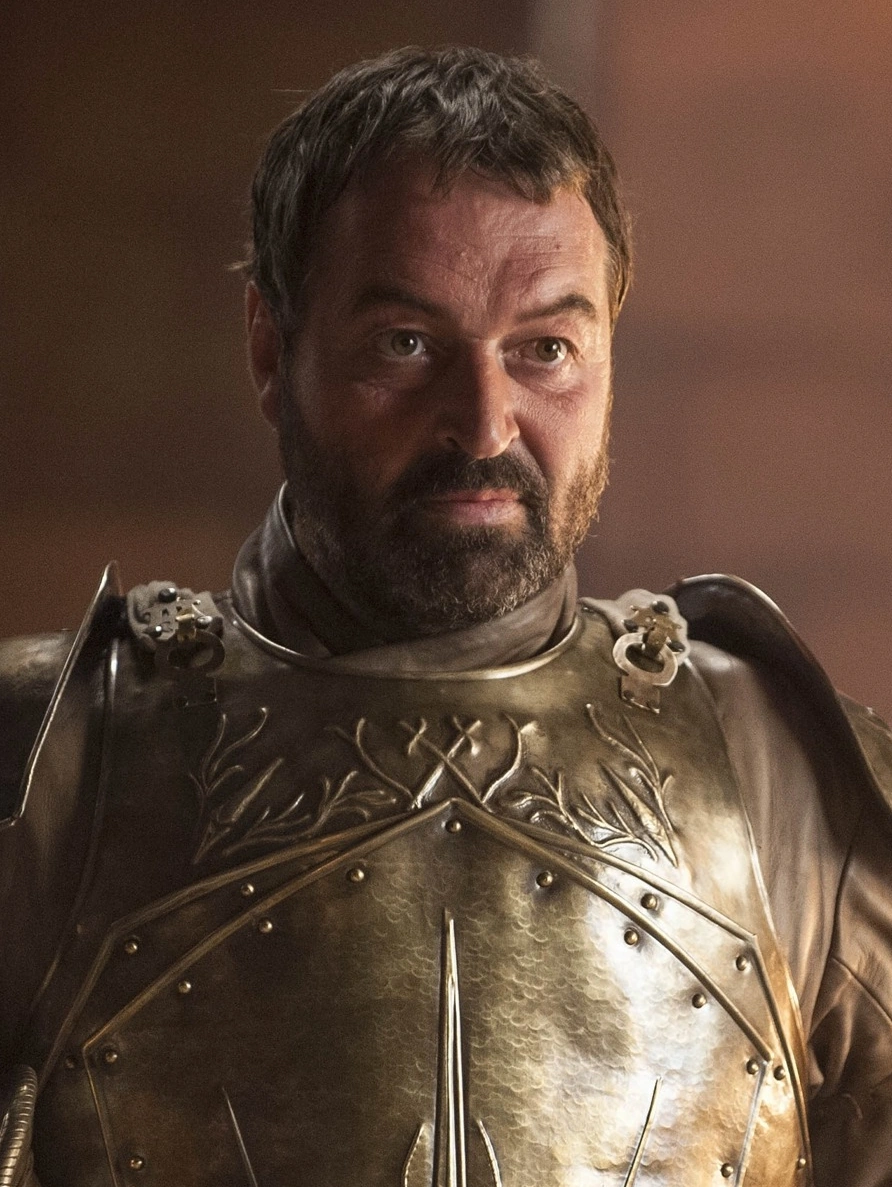
It figures that in an episode featuring Game of Thrones’ Meryn Traunt, everything winds up being his fault in some way.

In “Empress of Mars”, NASA has discovered a strange message on the red planet: “God Save the Queen.” The Doctor takes the TARDIS to the planet in the year 1881 – when the message apparently originated – to discover an army of Victorian soldiers, who are mining the planet after apparently striking up a deal with an Ice Warrior. But the selfishness of humanity leads to the awakening of the titular Empress of Mars and her army of dormant Ice Warriors, and war is on the horizon. Separated from Nardole and the TARDIS, the Doctor and Bill must play peacekeeper.

This season has been filled with really intriguing concepts for episodes, and this one continues that trend. It’s not often than humans are the alien invaders of an episode, and it was a nice touch having this episode after an entire trilogy based around a more traditional (but really not all that traditional) alien invasion.

I also like the morally conflicting situation this puts the Doctor in. The Ice Warriors have had their home planet invaded and exploited for mining opportunities, with one of their soldiers essentially forced into servitude. They’re definitely in the wrong here, but the Doctor can’t completely advocate for their side, as the Ice Warriors have much more advanced artillery than the humans’ Victorian-era firearms and would completely annihilate their invaders. Both sides can be seen in a sympathetic or antagonistic light, with neither side being fully in the right or wrong.

It’s nice to see the return of the Ice Warriors, a seldom-seen species in Doctor Who that I find oddly fascinating. In the classic series, they were much more plentiful, and have only made a few scant appearances in the revival. They’ve always been frightening simply by how much power and ferocity they possess. Those suits aren’t just big turtle shells; they’re high-tech armor casings that basically make the Ice Warriors big, lumbering, indestructible tanks. And those weapons they have that can somehow contort humans into fatal cubes…lordy.

"Make my monsters grow!!"


Iraxxa – the Empress of Mars – is a fresh sight, as giving the Ice Warriors a singular monarch was never a concept before. And I dig her design, with her Predator-like dreadlocks giving her a more distinct appearance than her underlings. Although, I wish there were more aspects like this that set her apart from the other Ice Warriors. I was kind of hoping that for a warrior race like this, their queen would show off far more tactical prowess than her soldiers. For example, maybe she could be a more agile combatant in her suit than other Ice Warriors, showing that in this society, might is what makes a monarch. Or maybe I just got caught up too much in her Predator-esque appearance and expected too much.

Regardless, on the Moffat Monster Scare-o-meter™, Iraxxa and the Ice Warriors score 3 Moffs out of 5.

The episode also has a decently satisfying character arc involving the commanding officer of the Victorian soldiers, who survived being hanged for desertion and redeems himself at the end by killing his traitorous and bloodthirsty second-in-command and making peace with the Ice Warriors. Though, I’m not quite sure how I feel about him swearing complete allegiance to Iraxxa to make peace. Wouldn’t that mean that his surviving soldiers would be pledging their allegiance to Mars instead of England (assuming that the rest of them stayed on the planet with him)? I don’t really think this is something a dedicated soldier would do – with my conception being that they would rather die for their country than surrender to a new master – but maybe the colonel’s cowardice has something to do with this decision.

So after the mystery of the Vault has been solved, a new enigma has popped up: The TARDIS apparently transports itself off of Mars and back into the Doctor’s office on Earth. Nardole is apparently unable to pilot it – despite previously being shown able to – and requires Missy’s help to get it back to 1881 Mars. Could this be the TARDIS itself trying to keep the Doctor’s promise for him? Or is there another force at work trying to screw with the Time Lord? Nevertheless, Missy is now free of the Vault, though she doesn’t show any resistance towards having to go back. Is she actually reforming, or is this all a long-game Master plot?

Oh, and that cameo at the end with Alpha Centauri – a character from the classic series – being voiced by the original actress from over forty years ago was a nice touch.

I feel that whenever Mark Gatiss (co-creator of Sherlock, who also plays Mycroft on that show) writes an episode for Doctor Who, it’s very middle-of-the-road; nothing spectacular, but nothing particularly awful. Just a fine episode. The past two episodes he wrote for the Twelfth Doctor – “Robot of Sherwood” and “Sleep No More” – were mostly enjoyable, though the latter episode was definitely the weakest of Series 9. “Empress of Mars” is another fine Gatiss episode, though I feel that the morally conflicting themes and supporting character arc are what save it from just being another middle-of-the-road episode.

The Mummy: In theaters June 9.


Final verdict: 8/10.


NEXT WEEK: A centuries-old mystery is finally solved: What really happened to the missing Ninth Legion of Rome?

Monday, June 5, 2017

Who Review: "The Lie of the Land" (Series 10, Episode 8)

WARNING: SPOILERS, sweetie


In which an alien invasion is thwarted by pictures of Bill’s mom.

The Monks have taken over the Earth, brainwashing the entire human race into believing they’ve been on Earth since the beginning of human civilization, when in reality, it’s only been a few months. Those who defy this new truth are oppressed. Bill – the cause of the Monks’ takeover – is struggling to remember what’s real. Along with Nardole, they scheme to take the Monks down and restore the Earth to normalcy. But it proves to be quite the challenge, as the Doctor has seemingly joined the Monks’ cause.

The concept of false memories has always been a terrifying prospect for me. Your mind tells you things have happened, you have vivid memories of events that have transpired, but in the real world, none of it was real. It would really make one lose trust in themselves. After all, if you can’t trust your own mind, what else can you believe in?

The Monks’ plan does seem to run into a contradiction from the previous episode, however. Last episode, they said they wanted to be loved, as ruling through love is more effective than ruling through fear. And while brainwashing humanity into believing that the Monks have been helping them throughout their history does add to the adoration factor, I’m not sure if violently detaining people who know the truth is helping matters. They do have a scene where people are cheering at an execution, and these people are probably viewed as criminals in the brainwashed society, but I feel like this kind of pseudo-dictatorship should raise a few more concerns than it does.

Not much comes from the plot point of Bill being the one who made the deal with the Monks. She’s made an important figure by being the “lynchpin” of the Monk’s brainwashing, but she doesn’t really show much guilt over how everything in this episode is her fault. There’s only one scene where someone – the Doctor – calls her out on how selfish her deal ended up being, but after that, everyone seems to forgive her as they work to stop the Monks. Even though they wouldn’t have to stop the Monks if Bill didn’t try to restore the Doctor’s sight.

It’s also established that because Bill has basically become the center of the Monks’ brainwashing, killing her would break the link, and everything would go back to normal. Does this create a moral dilemma with the Doctor over what’s more important, the life of his companion or the saving of Earth? Briefly, but it doesn’t create as much moral friction as I had hoped. Instead of the Doctor being forced to make a hard life-or-death decision, the Monks are defeated with the power of love or something.

Uh-oh, Grandpa fell asleep in the La-Z-Boy again.

And the Monks – this big threat of the season’s three-part story – are defeated entirely too easy. For an enemy that was able to set up a sophisticated simulation that proves that they know humanity inside and out, and who were able to accurately predict the potential end of the world, the Monks are defeated by simply broadcasting happy thoughts into the minds of everyone on Earth to break their brainwashing. The episode does establish that there’s only twelve Monks, so their numbers and resources and fairly minimal, but for the build-up they got, their undoing was a disappointment.

Oh, and speaking of disappointments, let’s talk about that totally stupid fake-out regeneration. This fake-out had been teased since the second trailer for Series 10, and everyone knew it was a fake-out. But, everyone wanted to see exactly what would come of it. Maybe it would be a way to restore the Doctor’s sight. Maybe him regenerating would end the Monks’ brainwashing. This could have been the emotional climax of the episode, with Bill being forced to shoot her friend to save the world. But what really happens? The Doctor is testing Bill to make sure she’s not brainwashed, with her gun being full of blanks and the regeneration just to make it look authentic. But my question is: Why did it need to look authentic? Why couldn’t Bill have shot him with blanks and then the Doctor reveals it’s all been a test? The fake regeneration is particularly unnecessary because, as far as I know, the Doctor never told Bill about regeneration. So who was he trying to trick? It wasn’t the other soldiers or Nardole. They were in on the plan. The only possible answer is that the show was trying to trick us, the audience. Meaning that the Doctor wasted regenerative energy for absolutely no reason other than a cheap fake-out to an audience he doesn’t even know exists. At least when Ten did his fake regeneration, it was left as a cliffhanger leading into the next episode, and it actually started out as a real regeneration.

Missy is also in this episode, but her role isn’t as big as I predicted. She does help out the protagonists greatly in telling them exactly how to stop the Monks and conflicting the Doctor over what to do, but then she’s gone. She doesn’t even get to leave the vault. There’s a scene at the end with her and the Doctor talking, and Missy reveals that she genuinely feels remorse over all the people she’s killed. I understand that that the scene was meant to show Missy’s character development, but the scene is inserted into the episode so awkwardly that it doesn’t flow. It’s over too quick, and leaves the episode without a really satisfying punch.

For all the build-up, “The Lie of the Land” was a bit of a letdown. I mostly enjoyed the Monks Trilogy for the interesting ideas it presented, and the Monks themselves were creepy and competent enough to keep my interest. But this final part just didn’t hold up to the rest. There was potential, and there’s some good emotional acting from Pearl Mackie and Peter Capaldi. But overall, it did not live up to the hype of the previous episodes. Out of these three episodes, I think “Extremis” is the strongest one. Sad that it’s the first part that’s the best, though.

It's as if millions of fans cried out in anger, and then were suddenly silenced.

Final verdict: 7/10.


NEXT WEEK: Victorian-era soldiers…on Mars?