Wednesday, July 12, 2017

Matt Reviews: Dracula vs. Hitler (by Patrick Sheane Duncan)


A different kind of Batman V Superman.

(Because Dracula is often associated with bats and Hitler’s subscribed to Frederich Nietzsche’s philosophy of the Übermensch, or “superman”.)

(Eh, forget it. I ruined the joke by explaining it.)

Set forty years after the events of Bram Stoker’s Dracula (or rather, the “real” events that were somewhat butchered by Stoker’s novelization), Professor Van Helsing and his daughter Lucy have become active participants in World War II. They have allied themselves with guerilla forces in Rumania – including Jonathan Harker, grandson of the original Harker from Dracula – to take down the Nazi occupation there. But they soon realize that they do not have the resources or powers to take down one of the strongest military forces in the world, so the good professor rationalizes that in order to defeat one monster, they must unleash another. And so, the Van Helsings and their allies make a pact with Abraham’s old foe: Dracula himself.

Much like the original Dracula novel, Dracula vs. Hitler forgoes the traditional chapter book style of storytelling in favor of telling the story through journal entries, private diaries, Nazi military reports, and excerpts from an unfinished novel. Not only does this style of storytelling make it much more unique than other modern novels like it, it helps add to the “this all really happened” vibe that Patrick Sheane Duncan works so hard to create. I always like fictional stories that take the standpoint of “These are true events that have unfolded. Pay no attention to the fact that this is in the ‘Fiction’ section at Barnes & Noble.” With the prologue of Duncan’s discovering of this “true” tale through forgotten government files, he does a great job of building up imaginary credibility to this account.

This choice of nontraditional storytelling also allows us to get a pretty good range of perspectives through a variety of journal entries and other private thoughts. Over the course of the 500-and-some pages, we get to see the story through the eyes and accounts of Abraham Van Helsing, Lucy Van Helsing, Jonathan Harker, Nazi officer Waltraud Reikel, and even Adolf Hitler himself. Parts of the story will go from Lucy’s unpublished novel describing her struggles to find a place in a male-dominated war, to Harker’s inexperienced musings about what he thinks war will actually be, to Hitler’s journal entries on his philosophies of immortality and what he ate for lunch that day. It gives a surprising amount of humanity to a wide range of characters. You really feel like you’re getting inside their heads to see what makes them tick, effectively providing the book with many interesting, three-dimensional viewpoint characters. Though, as a consequence to the book, this does mean that we pretty much know who’s going to survive each section of the book, as logic dictates they wouldn’t be able to finish their private entries if they had died.

Though sometimes these accounts do get flogged down with unnecessary repetition, particularly in the accounts from Harker. He’s infatuated with Lucy from the moment he meets her, and after the two have a one night stand early in the novel, he can’t stop thinking about how they’re destined to be together. It gets old fast, especially when there’s a war going on around him and all he can talk about is how lovely Lucy looks. I get that he’s young and impressionable when it comes to love, but there’s bigger stakes here than your broken heart, dude. Every time this repetitive romantic entanglement got brought up, I just rolled my eyes and wished it would cut back to the Nazi-killing vampire.

Speaking of which, the most interesting character is by far Dracula himself. Fitting, since he’s half the title of the book. He presents himself as this noble, romantic gentleman, with a savage side buried barely skin-deep that’s bursting to come out. His struggle throughout the book is one of redemption, trying to keep this beast at bay to clench onto what shreds of humanity remain. Admittedly, I didn’t quite buy it at first that a monster like Dracula could reform and become a more noble being with remorse for his murderous past, but you really grow to like and sympathize with the vampire over the course of the novel. Even though I disliked much of the romance that was in the book, his relationship with Lucy was something to admire. It’s definitely twisted in a kind of dark Beauty and the Beast kind of way, but also kind of genuine and mystifying in how well they compliment each other. It’s a real shame that he’s the one main character who we don’t get a first-hand account from, as I would have found Dracula’s first-person perspective on the story to be incredibly informative.

Despite the book being over 500 pages long, I still feel there’s some things the book could have expanded upon. At several times, Lucy makes references to her practices with the dark arts, but nothing really comes of it. Sure, she uses subtle magic in the story here and there, but it never becomes integral to the plot. There’s also some references to Dracula’s real-life history, as the story makes it clear that this Dracula is the same Vlad Tepes Dracula that became known as “Vlad the Impaler.” While they make references to his brutal rule and horrific past, I feel that a first-person point of view from the vampire himself would have elaborated upon this point in his life to better satiate those history buffs out there. And the ending leaves something to be desired. After everything that happens, it just kind of ends without a ton of fanfare. There’s an epilogue, but it’s not much. We don’t even get full closure on the ending whereabouts of our protagonists. Maybe there’s a sequel in the works, but I definitely need just a little bit more of these characters to see where they ended up.

Overall, Dracula vs. Hitler was a surprising read, not like the flashy B-movie suggested by its striking title. Hitler’s doesn’t even show up in the story until about the halfway point, but I guess Dracula vs. Hitler is a much better title than Dracula vs. A Bunch of Random Nazi Redshirts. When it’s not giving us in-depth looks into our main characters’ motivations, beliefs, and psyches, it’s a gritty war novel that throws in just the right amount of supernatural. The action is bloody and violent, especially when Dracula gets involved in the conflict himself. I’d highly recommend it to anyone who likes historical fiction and gothic horror. And for those of you who need your vampire romance fix, this book has a much better human-immortal love story than Twilight.


Final verdict: 8.5/10


But just think about the new sub-genre this book has opened up: horror movie monsters fighting historical dictators! What could be next? Wolfman vs. Stalin? The Invisible Man vs. Castro? Kim Jong-il vs. The Bride of Frankenstein? The possibilities are endless!

Friday, July 7, 2017

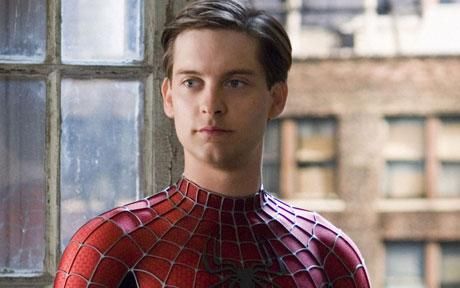
Matt Reviews - Spider-Man: Homecoming

WARNING: Spoiler-Man, Spoiler-Man, Does Whatever a SPOILER Can


Oh, Spider-Man. What a long and winding road we’ve taken to get you here. First a trilogy of well-received movies, only to have it end in a disappointing, overstuffed final installment. Then, the first reboot of two movies - divisive, to say the least - that ended in a disappointing, overstuffed final installment. And now, here we are: Spider-Man is finally part of a greater Marvel universe on the big screen, just like in the comics.

Except, you know, Aunt May is young and hot in this one.

Following the events of Captain America: Civil War, Peter Parker (Tom Holland) is still fighting crime on the streets of New York utilizing the suit given to him by Tony Stark (Robert Downey, Jr.). But being Tony's protege isn't exactly what he thought it would be, as he hasn't been recruited into any big Avengers missions since Civil War. Peter wants to spread his web-wings to prove to Tony, the world, and himself that he can be a superhero on par with Iron Man. Fortunately, he is given the opportunity when he stumbles upon a criminal ring that salvages and sells technology from superhero battles, led by vengeful construction worker Adrian Toomes (Michael Keaton), a.k.a. “The Vulture” (even though nobody calls him that in the movie). But Peter may be in over his head dealing with his big league threats, but it could also mold him into the hero he needs to be. On top of this superhero stuff, Peter also has to deal with normal high school drama, including bullies, trying to impress his crush Liz, and finding a date for the big homecoming dance.

So let me start off by saying that this is the Spider-Man movie I’ve been waiting for. Not the knock the other movies in their own portrayals of the Spider-Man universe, but I feel that this movie resonates with what first comes to mind when I think of Spider-Man. It’s got a young Spider-Man, someone who actually looks like they could be in high school, unlike the 20-somethings that have played him in the past. He’s funny, he’s awkward, he’s got this wide-eyed naivety about the world and what it takes to be a superhero. His overconfidence about jumping into action is both his greatest strength and weakness. He even goes back to save the Vulture from dying at the end. How often do you see movie superheroes actually try to save the villain? Usually the villains just dispose of themselves while the heroes nonchalantly shrug and move on.

Tom Holland perfectly nails everything that makes Peter Parker great, and I can say without a shadow of a doubt that he is my favorite live action Spider-Man. He’s funny when he wants to be, he’s serious when he has to be, and that scene when he’s buried under all that rubble, in pain, calling out for help before he gets his second wind...If you want proof that this kid has got what it takes to be an actor, look at that breathtaking, painful scene.

I think another reason it feels so much more like what I love about the comics’ Spider-Man is how intertwined everything is with the idea of a high schooler being a superhero. The other movies barely had Peter in school, and when they did, it was all about him leaving for college or other great things. There was still drama with his personal life, but it was missing the stressful aspect of being a student as well as a crimefighter. In this movie, Peter has to balance his superhero career while also worrying about school dances and academic decathlons.

"What are you?"
"I'm Birdman."

Even the twist involving the villain - yeah, didn’t expect that trope here - is tied into the high school motif. Was it a bit much for the movie to reveal that the Vulture is actually Liz’s dad, especially since such a connection is nowhere in the comics? Yes. Am I still chuckling at the absurdity of Peter going to Liz's house only to have the movie's main villain open the door? Absolutely. But in weird way, it kind of works. It’s kind of like how in Sky High, the main villain turns out to be the protagonist’s first love interest and classmate. It just fits with how everything revolves around the concept of Spider-Man having teenager drama as well as superhero drama.

So on that topic, let’s talk about the villain for a moment. Marvel has had a track record of having repeated uninteresting antagonists in their movies, but that has started to turn around in Phase 3 of the MCU. I thought that Zemo from Civil War and Ego from Guardians of the Galaxy Vol. 2 were both intriguing, compelling villains, and I think we can add the Vulture to this exclusive list. At first, I didn’t think I was going to like him. He wasn’t in the movie enough during the first half to really make an impact on me, and he only had the vaguest implications of a motivation. But after the reveal that he’s Liz’s dad, he started to grow on me a lot more. He’s a man who’s doing all this to support his family, no matter how low he has to stoop. Kind of a Walter White-ish figure in this regard, but with a better code of honor. He provides a nice parallel to Peter, as they’re both people who are hiding secrets that could endanger their families. He’s smart, too, being able to deduce Peter is Spider-Man by piecing together small details (unlike in previous movies where the villain just picks up a camera with “Property of Peter Parker” on it). I also thought it was an intriguing concept to make him a person who used to clean up after superhero battles before Tony Stark ran him out of business. Not only does this give him a blue collar, everyman perspective of the MCU, but it also provides a neat little door for connections between Spider-Man and the greater MCU. Plus, he’s played by Michael Keaton, and who doesn’t love a little Michael Keaton in their life?

Though there is one little problem I still have with Vulture’s concept in this movie. Apparently, Toomes and his crew have been stealing salvaged tech since after the Chitauri invasion, but apparently have been able to lay low all this time without raising any sort of alarm. I know the movie shows how careful Toomes’ gang is with their heists, but is this movie really telling me that nobody in the 4-or-whatever years since the first Avengers movie ever caught a glimpse of a giant winged man flying through the night skies? There were no crackpot reports of a “Bird-Man of New York” floating around? Those wings aren't exactly silent, and have you seen the size of them?

Also, as a side note, the film says there’s been eight years since Toomes lost his job right after the Chitauri invasion. And if The Avengers happened in 2012 and this movie takes place in 2016, not long after Civil War…someone on the writing team skipped out on math class.

As more trailers were released for the film, I – along with several others on the Interwebs – grew concerned that Robert Downey, Jr.’s presence in the film would overshadow poor Tom Holland, and that Tony Stark would effectively turn Spider-Man: Homecoming into Iron Man 4 (Guest-Starring Spider-Man). But surprisingly, Tony isn’t even in the film for all that many scenes. He’s there just enough to remind everyone Tony Stark is Peter Parker’s mentor, with some scenes of his father figure relationship with Peter as he berates or encourages his behavior. Funnily enough, I think Jon Favreau (playing Tony’s bodyguard Happy Hogan) is in this movie more than Downey, and he didn’t even direct this thing.

"What do you mean Cumberbatch was a better Sherlock Holmes?"

I think Downey’s presence in the film is generally how I feel about the MCU connections here: they’re there, but not obnoxiously so. Before Civil War, I was totally okay with the idea of Spider-Man not being in the MCU. I thought it would be cool if he was, but it wasn’t totally needed, as I felt that Spider-Man works perfectly fine on his own, secluded from the greater Marvel Universe. After all, it worked out well for the Raimi films and the Spectacular Spider-Man cartoon, for example. But while this film and Civil War cemented Spider-Man’s place in the MCU, the references to the greater universe were kept to a comfortable level. It was still a Spider-Man story with Spider-Man characters in a Spider-Man world, just occasionally they would throw in a PSA featuring Captain America talking about puberty.

But hey look, Gwyneth Paltrow’s back as Pepper Potts! That’s bigger than Zendaya basically being confirmed as Mary Jane Watson, right?

Spider-Man: Homecoming reminds me a lot of The Spectacular Spider-Man, one of my all-time favorite superhero cartoons. It shows a lot of the drama that comes with being Spider-Man, and how choosing superhero responsibilities over a social life has impacts on Peter’s relationships with people like Liz, Ned, and Aunt May. It features a ton of characters that are cheeky references to future supervillains or other impactful figures in Peter’s life. Whereas The Amazing Spider-Man 2 tried something similar, this movie feels more organic in how it introduced future characters from the comics, and didn’t feel like it was dropping in a ton of plotlines that would never be finished.

I don’t really have a lot of major complaints about the film. Mostly, my grievances are nitpicks. However, repeatedly during watching this film, it was painfully obvious when Spider-Man was a CGI creation. The suit just looked so flat and not textured at times, and looked more like a model from a Spider-Man video game for the Wii. I had hoped that they would fix the suit’s effects from Civil War, but alas. The design of the suit itself I have no problem with, though I do kind of miss the raised web design of the previous movies.

And I've complained before about how uninspired Marvel's post-credit scenes have been as of late, but this movie has probably the funniest one to date. It's a brilliant payoff to the "Captain America PSA" running gag, and is commentary on par with something you'd see in a Deadpool movie.

This isn’t just your run-of-the-mill superhero movie. It’s a teenaged coming-of-age story wrapped up in the trimmings of a superhero movie. It’s the story of a young man finding his place in his world, a young man proving what he’s worth, a young man who can also climb walls and shoot webs from his wrists. It’s like if the kids from Weird Science got bit by a radioactive spider (but not the kid that was played by Robert Downey, Jr.).

In short, Spider-Man: Homecoming is thus far my favorite Spider-Man movie, and I’m ecstatic that the web-head has finally found a home where he can truly shine. Can't wait for the sequel, which will most likely be called Spider-Man: Winter Semi-Formal.

Let's all just take a moment to remember that THIS is seriously the movie's official poster.
Yeesh.

Final verdict: 9/10

On a more somber note, Joan Lee – the beloved wife of Stan Lee – has just passed away. She was always an inspiration to Stan, and helped him out immensely when he was distressed and uninspired about his career. Without her influence, we may not have had many of the memorable characters brought to comics, film, and television from Marvel and Stan Lee. May she remain excelsior even from the great beyond, and my heart goes out to Stan.


Sunday, July 2, 2017

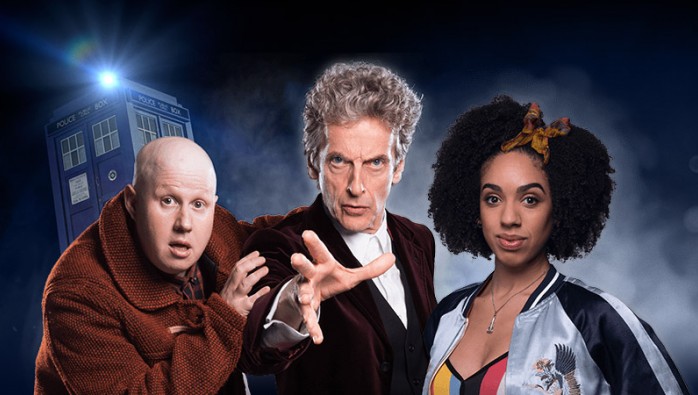
Who Review: "The Doctor Falls" (Series 10, Episode 12 - SEASON FINALE)


WARNING: SPOILERS, sweetie.


Well, here we are. The end of Series 10. Not quite the end of Peter Capaldi’s turn as the Doctor but…yeah, I’m still gonna need some Kleenex.

Following the events of last week’s episode, Bill is still a Cyberman, and Missy has apparently turned back to the dark side at the influence of her past self. But with the Cybermen approaching and constantly upgrading, and with our protagonists trapped on a floor of the ship that has been turned into a solar farm, the Doctor must work together with his enemies, allies, and a colony of farmers to fight off the Cyberman threat. And as the title implies, the Doctor will fall…

Okay, he won’t fall permanently because the Twelfth Doctor will still be around for the Christmas special before regenerating, but you get my point.

This was definitely a more action-packed episode of Doctor Who than what we normally get. Tons of explosions, tons of fighting Cybermen, and tons of the Doctor showing off how dark and scary he can be when the people he cares about are threatened.

As stated before, Bill is still a Cyberman, but she still retains her personality from before she was converted. Hence, she remains on the Doctor’s side. The way they film some of Bill’s scenes in this episode is incredibly clever, especially when she’s first introduced in the episode. She doesn’t realize she’s a Cyberman, so we initially see her from her point of view – a normal human – while everyone else reacts as if she’s a monster. From then, the episode keeps shifting back and forth from showing Bill as a human and Bill as a Cyberman. I kind of wish it had just kept her as a Cyberman for the rest of the episode after the reveal, but then we wouldn’t have had the rest of Pearl Mackie’s emotional performances, so I can’t really complain too much.

The two Masters also have great chemistry with one another. Any time more than one Doctor get together, they often spend a lot of time bickering and insulting each other before becoming buddies. But with the Masters, they start off on much better terms, even in a flirty, quasi-romantic state. It’s a really wonderful way of showing how much the Master is in love with his/herself, and makes this multi-Master story a creepy, uncomfortable antithesis to a multi-Doctor story.

"It appears we're being used to reference Bioshock--"
"--Infinite, yes, I can see that."

However, I’m a but disappointed how little of the episode is spent on the Masters teaming up against the Doctor, as they spend the majority of the episode either working alongside him or trying to escape together. A story with the Masters working together is what I would ideally want from a multi-Master story, as two versions of one of the Doctor’s greatest enemy working together would have provided a suitable threat to end the Twelfth Doctor’s tenure. But, I’m fortunate we still got a ton of great material involving the Masters’ interactions.

Oh, and let’s not forget the Master’s death – both of them! This is exactly how the Master would die: stabbing himself/herself in the back and providing a timey-wimey, Bootstrap Paradox mutually assured destruction. I kind of wish that with Missy’s death, the Doctor would have been there to at least say his goodbyes and not leave on a sour note, but I guess this makes it more tragic. And let’s face it, the Master’s not really dead. He/she never is. We’ll probably see a new incarnation pop up in a few years.

And I love how the Twelfth Doctor’s regeneration starts. He doesn’t want to change, much like the Tenth Doctor, but he’s actively, angrily trying to force back a regeneration, holding it back so much until it actually kills him. Even when he’s brought back so he can regenerate properly, he’s still refusing to change. With Twelve, he either dies as himself, or he doesn’t die at all.

So this means that, yes, the regeneration seen at the beginning of last week’s episode was technically a fake-out. The end result of the Doctor’s big “NO!” isn’t’ a regeneration, but it’s the start of one. But the way it’s presented, it’s a far less infuriating fake-out than the one earlier this season. At least with this one, we know that this will result in the Doctor changing at some point very soon.

There’s a few problems that pop up in the ending, involving some major deus ex machina stuff with the return of Heather. You guys remember Heather, the girl from the first episode of this season that Bill had a crush on, and then she got sucked into a puddle, turned into a spaceship, and stalked Bill and the Doctor across time and space? Well after being gone for the whole season, she shows back up at the end of the finale to turn Bill from a Cyberman into a puddle-person like herself – somehow – to give Bill the ability to resurrect the Doctor with her tears – somehow – and to take Bill on a journey across the cosmos.

While I am happy that Bill’s final fate isn’t one of tragedy, and I’m super grateful that Heather was able to come back to give closure to her relationship with Bill, it does come completely out of nowhere. Heather didn’t even have any appearances outside of the first episode, and there was no foreshadowing throughout the season that she might return. And the episode manages to muddle the rules of Heather’s powers even farther and make it more confusing as to what she’s capable of. So apparently, the puddle-ship can now rearrange molecules or whatever to pull Bill out of the Cyberman suit and make her a Bill-Puddle, and apparently their tears can bring a Time Lord back to life. Sure, why not? Also, it feels just a little too similar to Clara's final fate from last season, as both companions wind up living another life among the stars with someone who is not the Doctor.

'Tis a flesh wound.

Oh, and the First Doctor will be teaming up with the Twelfth at Christmas. This was already heavily rumored, but it’s really cool that this is true. The original actor for Doctor Number One, William Hartnell, died some time ago, but his legacy is being continued by David Bradley (Filch from the Harry Potter movies), who previously portrayed Hartnell in a docudrama about the series. Out of all the Doctors, I believe the First is the best fit for a team-up with the Twelfth.

So, does “The Doctor Falls” live up to the hype set up by “World Enough and Time”? In some ways, yes. But in many others, no. This episode definitely feels like a final, desperate battle for the Twelfth Doctor, and has a lot more action than anything seen in this season. You definitely get the feeling that Moffat is clearing the slate for when Chris Chibnall takes over as showrunner, with Missy’s death, Bill and Nardole going their separate ways, and the Doctor being alone again close to regeneration. And the emotional moments in this episode –the Doctor’s speech to the Masters, Bill’s discovery of what she’s become, the Doctor’s final stand against the Cybermen, etc. – are all on point. 

But there’s potential wasted with the initial team-up with the Masters and even with the Cybermen. Once the other versions of the Cybermen show up (an unnecessary addition, in my opinion), the Mondassian Cybermen go from acting like the cyber-zombies of the previous episode to acting like any other Cybermen shown on the show. After how unique the Mondassian Cybermen were portrayed in the previous episode, this is a real disappointment.

The main problem is probably the same one that plagued last season’s ending two-parter. Much like “Heaven Sent”, “World Enough and Time” set up standards that their following episodes – “Hell Bent” and “The Doctor Falls”, respectively – just couldn’t follow through with. It’s not necessarily entirely the episode’s fault; it’s just the unfortunate luck of following a crowd-pleaser. However, I feel that “The Doctor Falls” was a much better follow-up to “World Enough and Time” than “Hell Bent” was to “Heaven Sent”, but that’s probably because of how big this episode feels due to being one of Twelve’s final adventures.

But hey, kudos to the episode for actually having the Doctor falling.

Without hope, without witness, without reward.

Final verdict: 8.5/10.

And so, Series 10 comes to a close. What did I think overall?

Well, as I continually said through these reviews, Series 10 had a lot of great concepts. Spacesuits that require money to provide oxygen, an alien invasion that requires consent, a spaceship where time moves differently in different parts, and let’s not forget the episode featured almost entirely in a simulation where everyone kills themselves. Some times these concepts would work out, sometimes not so much. The Vault storyline was a big bugaboo here, since it started off by sucking us in, but ended on a predictable anticlimax. But nonetheless, this season definitely had some interesting concepts for episodes.

So, here’s what I thought were the Best Episode and Worst Episode of the season.

Worst Episode: “The Lie of the Land”
Not only did this episode provide an unsatisfying conclusion to the already-uneven Monks Trilogy, not only did it waste potential with the concepts provided to it, not only was it mostly unmemorable to me, but it had an absolutely infuriating fake-out regeneration that made no sense. The Monks Trilogy in itself was already very frustrating in how much it dipped in quality – with the best episode being its first part, “Extremis” – but “The Lie of the Land” was definitely the nail in the coffin and the low point of the season.

Best Episode: “World Enough and Time”
I gushed enough about this episode last week, but here’s a quick recap of all the things I liked: The slow buildup to the Cybermen. The terrifying atmosphere of the monsters themselves. The sheer fact that the show was able to finally make the Cybermen this scary again. The shock factor of Bill’s death. Missy’s attempt at redemption. The glorious return of the John Simm Master. The intriguing concept of time dilation due to the fact that while also being a trippy time-related plot device, it is also a real scientific phenomena. I don’t think I need to say anymore; “World Enough in Time” is a great episode, and definitely the “Heaven Sent” of the season.

Ranking it among the Twelfth Doctor’s other seasons, it’s better than Series 8, but not as good as Series 9. But then again, it’s hard to top the sheer scope of Series 9 and its constant use of big, two-part episodes. Plus, Series 9 is widely considered one of the show’s best seasons. The quality of Series 10 wasn’t always consistent, but it was definitely better at delivering good episodes than Series 8 was. And it introduced Bill, a great companion who started off a lot better than previous Moffat-created companion Clara Oswald. Whereas Clara started off as a "Mary Sue" character type, with a long-running mystery involving her importance, Bill started off as a working class girl whisked into adventure. I feel this is the best way to go with Doctor Who companions: have them start off as extremely ordinary, only for the Doctor's influence to turn them into something more. 

Overall, for a final season for Capaldi, I thought Series 10 was pretty solid.


I’ll be back to talk about Doctor Who again around Christmas, when the Twelfth Doctor regenerates in a final adventure with the First Doctor, and Steven Moffat leaves as showrunner. Be warned: tears will be shed then.

But make sure you stayed tuned to this blog for what TV show I’ll be talking about next. Because in just a few weeks, winter is coming…